


Citraton – A Versatile and Safe Alternative
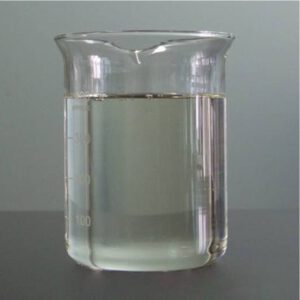
Citraton, also known as Triethyl Citrate (INCI: Triethyl Citrate, CAS: 77-93-0), is a colorless liquid widely recognized for its use as a non-toxic plasticizer and stabilizer. With a molar mass of 276.29 g/mol and a density of 1.135 g/cm³ at 25 °C, this ester offers a safe alternative to conventional phthalic acid-based plasticizers. Its poor solubility in water (65 g/L at 25 °C) but good miscibility with ethanol and diethyl ether makes it highly versatile in industrial applications.
INCI Triethyl Citrate
CAS 77-93-0 (1,2,3-triethyl 2- hydroxypropane- 1,2,3- tricarboxylate)
Thermal and Physical Properties
Triethyl Citrate remains in a liquid state due to its low melting point of -55 °C, while its boiling point is 294 °C under normal pressure. The vapour pressure at 25 °C is extremely low (0.0025 Pa), increasing to 1.3 hPa at 107 °C. The Antoine equation parameters for its vapour pressure function are A = 3.88263, B = 1743.204, and C = -122.435, valid for a temperature range from 380 K to 567 K. The compound’s refractive index of 1.4455 (at 20 °C) further supports its role in various applications.
INCI Triethyl Citrate
CAS 77-93-0 (1,2,3-triethyl 2- hydroxypropane- 1,2,3- tricarboxylate)
Safety and Flammability Considerations
Although Triethyl Citrate is considered a safer alternative to phthalates, it is still subject to handling precautions. It forms flammable vapor-air mixtures above its flash point, which is 150 °C. Despite this, its high boiling point and low vapor pressure at ambient temperatures contribute to its safe use in various industries, including food, cosmetics, and polymers.
INCI Triethyl Citrate
CAS 77-93-0 (1,2,3-triethyl 2- hydroxypropane- 1,2,3- tricarboxylate)
Applications in Industry and Food
Triethyl Citrate is widely used as a carrier, stabilizer, and plasticizer in different industries. It finds applications in food (E 1505), deodorants, polymers, and pesticides. In the EU, its use as a food additive is restricted to flavorings and egg white powder. Due to its non-toxic nature, it is increasingly replacing conventional phthalates in plastic formulations, contributing to safer consumer products and more environmentally friendly materials.
INCI Triethyl Citrate
CAS 77-93-0 (1,2,3-triethyl 2- hydroxypropane- 1,2,3- tricarboxylate)